Blog

“It Gets Better”

This post has nothing at all to do with the Beatles song by similar lyrics. But it has everything to do with what I’m convinced is the civil rights issue of our age: homosexuality.

First, watch the recent video from Fort Worth (TX) councilman Joel Burns:

Special thanks to my friends, Pastor Doc Newcomb and Pastor Joshua Manning for making me aware of this video today by posting it to Facebook.

As human beings, we are generally born with an orientation towards the “Golden Rule,” and especially as Christians, we are taught to love [New Testament Greek = αγάπη, written in English “agape,” pronounced a-gah-pay, an inclusive and outwardly-focused love] our neighbor. This isn’t a selective exercise, however; we are also taught to αγάπη our enemies. The takeaway is that as sons and daughters of God, we are to αγάπη everyone. Make no exceptions to your αγάπη, as Jesus makes no exceptions.

Now, certainly, in the life of Jesus, we find instructions on how to react toward the rejection of our αγάπη and our message: shake the dust off your feet and move along, because your αγάπη can be best utilized elsewhere. What Jesus is saying here is that there are no prerequisites for your αγάπη and your care, but people are free to respond to your message of inclusion however they like, after which you are entrusted to make a responsible decision about where and how to spend your time and share your αγάπη.

As a Christian disciple and heterosexually married man, I declare today that bullying toward “the others,” in this case, homosexuals or assumed homosexuals, needs to end. In Christ, no one is assumed as being “the other,” and bullying is never an act of αγάπη. Our children need to be responsibly taught these things, especially that hate gets you nowhere. Whatever your personal preconceptions about homosexuality may be (hey, I’ve got mine, too) and whatever Scriptural basis you may have for oppression, hate is not allowed in Christ.

Everyone deserves the same rights. Our ancestors had no right to forcibly remove Native Americans from their land. Just a generation or two ago, there was no justification for African-Americans to be forced to use different facilities than whites. While Christian marriage is defined as involving a man and a woman, today there is no reason why homosexual couples in our society cannot have every same legally binding right, perhaps defined as a civil union, as heterosexual couples. Biblical characters got these things involving rights dead wrong, too, and if you don’t believe me, read the book of Judges from beginning to end and tell me how holy ancient Israel was.

We can be the first society to get universal rights, and αγάπη, right. Something tells me that as a whole, we won’t, but for those of us called toward reconciliatory action, it’s time to come out of the woodwork and speak up.

EDIT: Apparently my comments are heretical and caused a minor firestorm on Facebook! Someone who I know from the church I grew up in challenged my ideas, and without naming names, I want to post our back-and-forth over the topic, particularly because I think my responses are an important part of the discussion that we need to be having. In some cases, I have simplified or rephrased our comments without altering the integrity of the content.
i couldn’t disagree more.homosexuality is a perversion and a sin. Leviticus 18:22 and 20:13; Romans 1:26-27; 1 Corinthians 6:9-10; 1 Timothy 1:9-10. Bullying IS wrong- but endorsing sinful behavior is also wrong. Where is the line to be drawn? wherever public opinion deems it to be drawn? and now people are being fired/legally fined for speaking the truth of God’s word?
Peace and love, [redacted]. But, if we’re going to turn to Leviticus, 1 Corinthians, 1 Timothy, and Romans for a constitutional read on what is definitively right and what is definitively wrong (speaking for God), then allow me that same power for a minute. 

Leviticus 19:19 identifies wearing clothing made of two kinds of material a sin. Leviticus 20:9 says that anyone who curses his mother or father must be put to death. Paul writes in 1 Corinthians 11:5 that “every woman who prays or prophesies with her head uncovered dishonors her head.” In 1 Timothy 2:11-12, someone claiming to be Paul continues the misogyny, saying women should learn only in “quietness and full submission” and that women should never have an authority role, including teaching. Verse 15 claims that women will be “saved through childbearing.” In another of his letters, Paul writes that slaves should accept their lot in life, and obey their masters as they would obey Christ (Ephesians 6:5). I, for one, do not wish that “public opinion” hadn’t “drawn the line” against these laws, practices and beliefs.

Let’s go on. In Romans 3:10-18, Paul quotes psalms of David, affirming that that no one is righteous, no one seeks God, and all have together become worthless. Paul then says in his own words, in verse 23, that all have sinned and fall short of the glory, then in verse 24 we find that the same collective “all” from verse 23 are “justified freely by his grace.” What do you do with these verses as someone who is claiming perfect authoritative interpretation of the Bible? Is homosexuality too grievous a “perversion and a sin” to receive the grace of God through Christ?

I am also convinced that you read words, phrases, claims, etc. into my blog post that aren’t there. I said nothing of sin associated with the homosexual act; yes, a constitutional read of the Bible does come down pretty firm that the homosexual act is a sin. It may be so… again, I am refusing the power to speak for God in this instance. I realize that the texts of the Bible were written in a time where people had no concept of sexual orientation, that a given person may in fact be predisposed somehow to homosexuality. I didn’t always take this view; to me, homosexuality seemed and still does seem unnatural. Why, I ask, would God create people who desire homosexual activity over heterosexual activity? It’s not good for reproduction, or it doesn’t make sense, I would have said. But using this same logic, why would God create people with Down’s Syndrome, cerebral palsy, Tay-Sachs, cystic fibrosis, as eunuchs, or even with a predisposition to cancer (from an arbitrary thing like past family history)? Present day me says that these “don’t make sense,” and subsequently that a homosexual orientation – just like a congenital disease – does not constitute sin.

In the gospels, Jesus is silent on the issue of homosexuality, unless you read into his quote of Genesis 2 an implied curse against homosexuality (which is a major stretch). We do, however, have the entire body of Jesus’ actions on which to make a better assumption, one that is less of a stretch than that one. Jesus is a friend of sinners, one who will associate with everyone, including the biggest ostracized group of rejects of the day. Lepers did nothing to contract their disease, and Jesus still stood by them. Please, find an instance in the life of Jesus where he shows a prerequisite for his love and grace, or rather, where he refuses to be associated with someone based on some factor that he finds too repulsive, too “perverse.” Jesus is inclusive of everyone, especially the lowest in society, every time he gets the opportunity. And as Christians, we are called first to emulate Christ, and second to uphold the law and commands of the apostles (which apparently includes giving women an exceptionally low social status, owning slaves, killing our sons and daughters who curse their parents, and wearing only clothing made of the same fiber). We also have some quotes of Jesus that lead us in a better direction. Consider, Luke 6:32-42. “Do not judge, and you will not be judged.”

I know I am fighting a losing battle. Constitutional readers of the Bible are always going to have these verses to point to, to hold up as their ideal while ignoring others that are no less Scripture than the ones they prefer. I guess that’s what I’m accused of doing as well. However, I’m not afraid to claim it; I read the Bible as more of an anthology, a library, than a constitution.

As Christians we need to befriend homosexuals, to αγάπη love them and know their struggles, to understand their humanity and the oppression they have faced, well before we can say the first word about their sin. We need to stop speaking for God without having lived for God.

are you just as comfortable substituting “pedophile” for “homosexual” in all you’ve said? All the same arguments that can be used for granting civil rights to same-sex couples can be used to grant civil rights to any number of perversions….
I agree 100 % with agape love; I strive to practice it always. Building relationships with ANYONE living openly in ANY sin should be a pre-requisite, but the goal should always be to lead them to a realization of that sin, and therefore to the cross, and not to give it a stamp of approval by granting civil rights status. We are already seeing the repercussions of such a movement. Witness the college teacher, teaching a class of Roman Catholic beliefs, fired for doing just that.
Or the Pastor who was fined $7000 and ORDERED to “stop expressing his biblical perspective of homosexuality” for sending in his opinion to the editior of a newspaper.
There’s many more stories like this out there. When “civil rights” are given to a group of ANY kind living in open sin, then Christians LOSE the civil right to say what the Bible says concerning that sin.
[Redacted], moving from homosexuality to pedophilia is a fantastic, possibly homophobic leap. People of any orientation – toward the opposite sex, same sex, both sexes, giraffes, etc. – can be pedophiles, and they deserve the full extent of the law’s repercussions for the act of pedophilia, NOT their sexual orientation. 

But, what you just did in your response to me was 1) skirt the questions I asked you, and 2) tell me what my logic means to me. I can’t handle #1 myself – that is something you must do. But I can address #2, since you made another leap for me, one that I’d like to use my own logic on. You said:

“All the same arguments that can be used for granting civil rights to same-sex couples can be used to grant civil rights to any number of perversions.” 

Sure, they can, but those arguments used for other “perversions” are taken out of context, irresponsible, and not made by me. Since I mentioned giraffes above, I’ll take Leviticus 18:23 and 20:15-16. I agree about this; sex or even the desire for sex with animals is detestable, and a true perversion. Let me firmly say that a man and an animal do not deserve civil rights. But does it demand death of the person, as the latter passages say? I wouldn’t say so. Neither do relatives who wish to marry deserve civil rights, even cousins as is permissible in many states after reaching a certain age (Leviticus 18:6). 

Just to be clear, the civil rights I am talking about for homosexual couples include tax breaks, the ability to be present with one another at a hospital bed, and the like. These do not include forcing Christian pastors to marry homosexual couples, or even for you to approve of their being together (that is your choice). More to the point of my original blog post, as members of society often bound by the hand they are dealt, they deserve to live life, not to be bullied for their orientation.

Like you, I am extremely cautious and worried about celebrating flagrantly homosexual culture as if it is a great and wonderful thing. Doing this through the media, TV shows and whatnot goes beyond αγάπη love to rubber-stamping the culture, which is not something that I (as one who refuses to speak for God on this issue) am not able to do. But limiting the impact of this celebration of culture (don’t buy those TV channels, teach αγάπη love rather than oppression), rather than refusing civil rights to homosexual couples, is the better way to go about this.

As to the cases you cite, I am unfamiliar with them other than reading over the (biased) links that you provided. There are two sides to every story, and pardon me if I refuse to believe everything I hear from Focus on the Family. But I’ll take the cases one-by-one anyway.

First, you have to know that adjunct professors are adjunct professors for a reason. In Dr. Howell’s case, it seems that he splits (or used to split) his time between U of I and the St. John Institute of Catholic Thought, where he is the institute’s director. This alone isn’t terrible or contestable; you expect a Christian professor to be involved in other ministry activities beyond the classroom. But when the language of ministry is used IN the classroom to influence the beliefs of students, especially at a public university, you’re going to have problems. I agree wholeheartedly with the student (who claims to have been raised Catholic, by the way) who sent the email, which said:

“Teaching a student about the tenets of a religion is one thing. Declaring that homosexual acts violate the natural laws of man is another. The courses at this institution should be geared to contribute to the public discourse and promote independent thought; not limit one’s worldview and ostracize people of a certain sexual orientation.” 

Universities, even seminaries, are to be about free thought and allowing students to reach their own conclusions within an educational framework. That is why I’m going to the School of Theology at Anderson University, where I am not pressured to believe everything professors say (I don’t), but challenged to digest their thoughts in light of everything else I see in the world around me, including the Bible. In fact, most times the professors reserve their personal opinions about issues, instead allowing us to make our own judgments without those biases mixed in. It’s a beautiful thing. 

A lot of seminaries do fit you into a certain theological box. That’s fine and dandy, as long as students go there knowing what they’ve signed up for. It’s not okay in an undergraduate setting at a public university, where apparently Dr. Howell was saying “things that were inflammatory and downright insensitive to those who were not of the Catholic faith.” To teach natural moral law in the classroom as a belief held by Catholics as a whole is one thing; to preach natural moral law there as God’s absolute truth is quite another.

The second case is more difficult. I read other (less biased) articles about it, and it appears to me to be a free speech issue. With limited digging into the subject, I believe the University of Calgary professor is in the wrong, and the Reverend shouldn’t be fined for his (seemingly homophobic) letter to the editor. Particularly telling to me is the fact that “one national gay rights group has said that it won’t support Lund in order to respect Boissoin’s freedom of speech.” But, it’s important to view this as a case unto itself, and one in Canada no less, rather than a universal point of view to be imposed on me or you for expressing our own ideas.

Your last sentence is concerned with denying civil rights to groups living in “open sin.” As far as I know, Jesus makes no distinction between open sinners and closed sinners… all are sinners. In fact, Jesus is chastised many times by the Pharisees for associating with “open” sinners.

And finally, in many cases, Christians don’t have the absolute right to say what the Bible says concerning sin. You can say one thing or another from your own point of view, but in speaking for the Bible you are ignoring centuries of human intervention, revisions, copying errors, scribal additions, and the like, to say nothing of the translations from Hebrew, Greek and Aramaic. This is not a right we have lost, it is one we never should’ve had in the first place.

Ultimately, [redacted], this is a conversation that Christians need to have, need not be afraid of. But we also need to approach it with an open mind. Since I have first read your links, if you are willing, there are a couple of chapters from books I have that I’d like you to read, and then hear your perspective on. If you agree, I’d be happy to photocopy the pages and send them to you. If not, I understand, but I hope you’ll consider it.

Jesus the Riddler?

I’ve updated my “Currently Reading” section in the right-hand margin because, well, I’m reading a new book! Not that I’m no longer reading the apologetic commentary on the Old Testament… this new book – Jesus the Riddler: The Power of Ambiguity in the Gospels – just happens to pique my historical Jesus interest more.

No, not that Riddler… no matter how much the photo reminds my about one of my more favorite portraits of Jesus. But, I digress.

If you’re familiar at all with the gospel accounts – and especially, the words of Jesus as they are portrayed – you know there are many, many times when the disciples (or the crowds) simply do not comprehend the things Jesus says. The gospel writers/redactors sometimes take great joy from the fact that the disciples couldn’t figure their Rabbi out. Significantly, the writer of John identifies the instances where his readers would obviously understand Jesus words, even if those around Jesus at the time didn’t.

Knowing this, I decided to do some research into the potential ambiguity of Jesus’ message and how it might have sparked the wildly different and conflicting beliefs of Jewish-Christian groups that formed in the first two centuries following his death. This will eventually turn into my term paper for my History of the Christian Church class, where I am specifically interested in the Ebionites, Nazoreans and Marcionites, but for now, I want to share the book and the concepts it postulates. I believe it could introduce you to a new way to view Jesus!

From his ministry, we know that Jesus was a public orator. We also know that he would frequently teach only his disciples, and that at times he would engage in verbal confrontations with groups of Pharisees or Sadducees. But these facts alone don’t make him a riddler. Two essential elements of his conversation would qualify him as that:

  1. Ambiguity, which involves the delivery of teaching that could be taken to mean more than one thing, and in which one of the options is distinctly “correct” in the mind of the deliverer.
  2. Intentionality, or a purposeful use of language to create confusion, double meaning, etc. If a saying is ambiguous but unintentional, it is merely vague or poorly worded.

Tony LaRussa has been manager of the St. Louis Cardinals for almost as long as I can remember, since 1996. And when you listen to him answer questions at a press conference or on a radio show, generally you walk away wondering what exactly he said. His answers can frequently go either way, qualifying him as a riddler. This is a picture of LaRussa with a dog, for no reason in particular.

TLR with dog in dugout.

If I haven’t lost you yet, let’s come back to Jesus (isn’t that a Third Day song?). As I said, Thatcher’s book is a foray into the historical Jesus from an angle that is entirely fresh to me. Part of this, however, is due to the nature of Jesus’ sayings that qualify as riddles: often times they do not meet the principle of multiple attestation. In other words, a riddle may appear in the gospel according to Luke, but not any others. Or sometimes, the riddle may be part of a story that appears in all four gospels, but the riddle itself is only contained in the gospel according to John. Historical textual criticism values multiple attestation is a marker for sayings that are more likely to actually date back to Jesus, and in a lot of cases the Jesus Seminar had major doubts about riddle material.

But, this isn’t necessarily the case for the riddle construct that Jesus is ascribed to have used. And many of the parables can be understood as an extended form of riddling that also accompanies storytelling. So, are there implications that accompany the view of Jesus the Riddler? Thatcher writes (emphases his):

I assert that it is likely that Jesus asked and answered riddles on a regular basis; I am not concerned about particular riddles recorded in the Gospels but about whether he engaged in riddling at all. I claim that if Jesus engaged in riddling at all, this fact is significant to key aspects of our understanding of his social posture and message.

In other words, my argument does not depend on whether or not Jesus actually asked people how the Messiah could be both “David’s son” and “David’s lord” at the same time. My argument depends, instead, on the fact that Mark, Matthew, Luke, John, Thomas, and virtually every other extant ancient source for Jesus’ teaching claims that Jesus said things like this to people on a regular basis.

I am presently about a quarter of the way through the book, and I am finding that Thatcher makes very thought-provoking arguments. While I may not start thanking God in prayer for sending the Great Riddler to this earth, this is a wonderful new way to think of Jesus. And, with these thoughts in mind, it’s much easier to be sympathetic to the way Gnosticism – in particular, the Gospel of Thomas, bloomed. Doubtlessly, I will seek to post additional blog entries when new ideas from the book excite me, and once I have read it, I will post my overarching conclusions and takeaways.

Inconsistencies in Exodus’ Ten Plagues

For Old Testament, we students reflect weekly on “some topic, aspect or concept” from the volumes and volumes of assigned reading. This last week included the first twenty chapters of Exodus, about 13 chapters of Numbers, and corresponding commentaries. The topic about which I chose to write was inconsistencies in the account of the ten plagues.

I was limited to one single-spaced page, but probably could have gone on for a while longer. For example, the topic of naturally occurring disasters that could explain the plagues intrigues me quite a lot. But, I digress.

If you are interested in more selections from my School of Theology Coursework, follow the link to the category of SOT Coursework. I have also set up a new category for these Old Testament reflection papers called OT Weeklies. If all goes well, each new reflection paper will be posted automatically at 2:00 p.m. each Monday, when my Old Testament class convenes.

What follows is my reflection paper. Enjoy!

————————————————————————————————–

Ten plagues wreaked utter devastation on the Egyptian people, land and spirit before Pharaoh ultimately allowed Moses and his fellow Israelites to proceed out to the desert (Ex 7:14-12:30).  In a fascinating fashion, the Exodus narrative simultaneously highlights the power of God over Pharaoh and the forces of nature in a display that Victor P. Hamilton claims will allow all parties – Pharaoh, Egyptians and Israelites – to “indeed acquire knowledge of the true God.”[1] All may not have realized that goal, however, and the account of the ten plagues unfortunately leaves inquisitive readers with as many questions as answers.  This reflection paper explores such questions regarding two major inconsistencies in the Exodus reading.

After repeatedly hardening his heart and having his heart hardened by God through four plagues, Pharaoh is once again offered an opportunity to let the Israelites leave.  Pharaoh does not respond, and God sends a plague of pestilence upon the Egyptian field livestock – or more specifically, upon “horses and donkeys and camels and on your cattle and sheep and goats” (Ex 9:3 NIV).  Shortly thereafter, it is reported that “all” of the Egyptian livestock died, whereas “not one animal belonging to the Israelites died” (Ex 9:6 NIV).  Bart D. Ehrman asks, “How is it, then, that a few days later the seventh plague, of hail, was to destroy all of the Egyptian livestock in the fields?  What livestock?”[2] Furthermore, the tenth plague relates that not only have the firstborn of Egyptians from all different kinds of social classes and backgrounds been killed, but “the firstborn of all the livestock as well” (Ex 12:29 NIV).

If one assumes the particular view of Biblical inerrancy, he or she might also have to deduce fanciful manners of spawning by Egyptian livestock.  Perhaps, however, a more apt explanation is simply lost in translation.  In their exploration of the ten plagues as “an aberrant El Niño-Southern Oscillation teleconnection that brought unseasonable and progressive climate warming” to portions of Egypt other than inland Goshen[3], N. Joel Ehrenkranz and Deborah A. Sampson make a decidedly linguistic deduction.  “We take ‘cattle’ to be a generic term for two distinct collections of livestock: animals in pasture that are killed in plague 5 and animals destroyed in plague 10 that are located elsewhere – presumably at Egyptian dwellings.”[4] Still, this assumption begs the question: what division of animals died in the hailstorm (Ex 9:21)?

Another significant inconsistency in the account of the ten plagues comes after an irritated Pharaoh orders Moses away following the ninth plague, of darkness.  Pharaoh claims that Moses will die if the Israelite sees his face again, and Moses affirms that he will never again appear before Pharaoh (Ex 10:28-29).  But depending on one’s reading of the passages that follow, Moses and Pharaoh definitely meet again at least one more time (Ex 12:31-32), and possibly even twice (Ex 11:4-8).  And chronologically, on the latter of these two occasions, Pharaoh urges Moses to bless him – a far cry from attempting to kill God’s messenger.

Even with his willingness to bring up – and explain away – criticisms within the source text, Hamilton does not address apparent inconsistencies within the ten plagues narrative.  To be sure, the presence of inconsistent textual renderings does not detract significantly from my comprehension of the story, and neither is such a phenomenon limited to these five chapters.  However, they do create certain problems for Christians with more lofty views of the Bible.


[1] Victor P. Hamilton, Handbook on the Pentateuch (Grand Rapids, MI: Baker Academic, 2005), 159.


[2] Bart D. Ehrman, Jesus, Interrupted: Revealing the Hidden Contradictions in the Bible (and Why We Don’t Know About Them) (New York: HarperOne, 2009), 10.

[3] N. Joel Ehrenkranz and Deborah A. Sampson, “Origin of the Old Testament Plagues: Explications and Implications,” Yale Journal of Biology and Medicine 81, no. 1 (March 2008), under “Abstract,” http://www.ncbi.nlm.nih.gov/pmc/articles/PMC2442724/ (accessed September 25, 2010).

[4] Ibid.

A Day In The Life… of The Beatles

And now, a post dedicated to what amounts to my favorite song of all time. It’s The Beatles, and it’s also epically unorthodox… maybe that’s why.

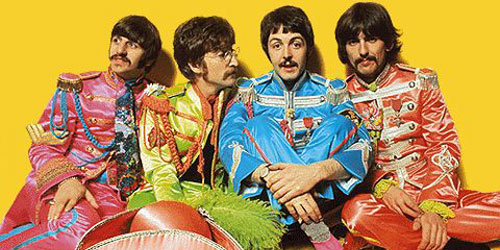
The Beatles, dressed in their "Sgt. Pepper" garb.

A Day In The Life is the culmination of The Beatles’ Sgt. Pepper’s Lonely Hearts Club Band, which is often referred to as a concept album. Let’s just say it was a great concept; it sold in excess of 32 million copies. Sgt. Pepper was also the symbolic point at which Paul McCartney’s genius began to publicly outweigh John Lennon’s genius, though I would suggest that Paul’s contributions clearly validated this even before Revolver took shape.

But enough of the John-Paul nonsense. Some of their best work materialized in tandem, and A Day In The Life is either Exhibit A or 1a, depending on your empathy with The Beatles’ early library (I don’t listen to much before Rubber Soul, personally). Certainly, they wouldn’t have made it anywhere near as big without one another.

Many claim that A Day In The Life is John’s song, and I guess that makes sense if you’re only listening to the three “I read the news today” verses. If you think that’s all there is to the song, then try listening to this studio take and arguing that it would’ve been half as groundbreaking as it really was.

Take Paul out of the equation on this song, and you lose the middle eight (with that astounding voice, no less), the intoxicating bass line, most of the piano, and the orchestral crescendos. Without that, you’re just left with a guy strumming his guitar in a dimly lit coffee shop.

Add that back in, and you’ve got a redonkulous song. The first 1:30 of this video is that studio take, but the remainder of the clip gives you both the album version of the song (bonus, it sure sounds like the 09-09-09 remaster) and the closest thing to a “music video” that existed in The Beatles’ hay-day.

I’m also a big fan of this video as taken from The Beatles: Rock Band video game. They say that reconstructing history takes imagination, right?

So, there you have it. My favorite song of The Beatles’ library (at the moment), and one of the most epic songs of all time. And that’s only because the Abbey Road Medley isn’t considered a single song.

Wedding Photos!

Recently, my wife Lauren and I received our wedding photos from our photographers Cameron and Mindy Braun! I decided I’d post a sample of their great work here, but if you’re so inclined, you can check out all of their galleries. It goes without saying that if you’re getting married within a stone’s throw of Dayton – their home base – you’re doing yourself a favor by booking them!

This slideshow requires JavaScript.

In addition to this, I’ve added a Privacy statement to my blog. It’s short. GoDaddy told me to do it.