You may already know that I have hosted Biblical Studies conversations for the New Books Network for a little more than a year, but I was delighted to be invited last month by Dr. Jonathon Lookadoo, a fellow early Christianity and Apostolic Fathers scholar who has also written on The Shepherd of Hermas, to speak about my own book. Our conversation lasted for about 70 minutes and ranged from my background to how I came to specialize in The Shepherd to the ins and outs of my book’s argument both about the nature of Hermas’s message and The Shepherd in the context of the New Testament canon. Listen to our conversation here:
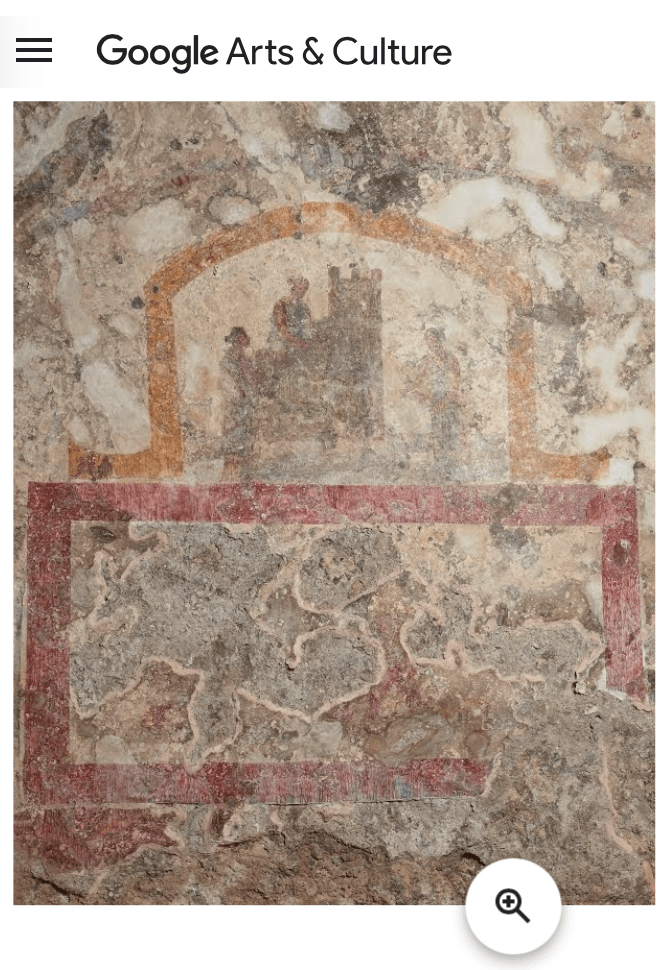
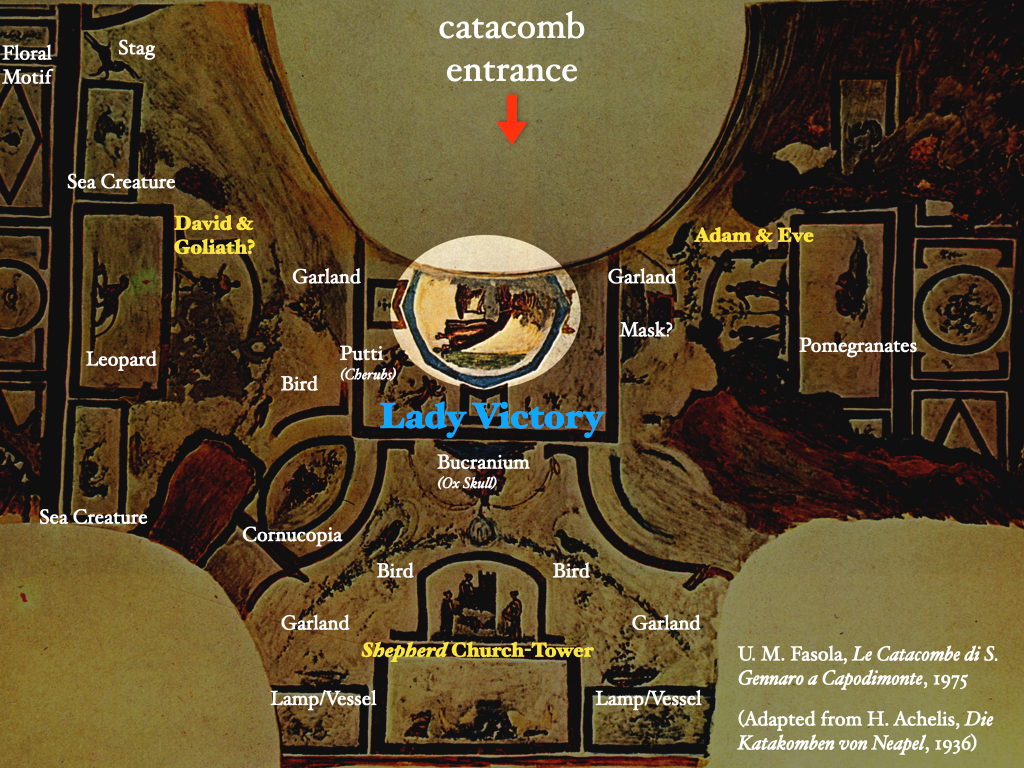
Perhaps the most interesting topic we covered concerned what I called the “anonymous indications” that The Shepherd was a valuable and integral component of early Christian piety. One of these in particular featured my analysis of the Church-Tower fresco (from Vision 3 and Similitude/Parable 9 of The Shepherd) in the San Gennaro Catacombs of Naples, Italy. While you listen to that discussion, it might be worthwhile to view the artwork in question from the third-century cubiculum of the catacombs via Google Arts & Culture, as well as to consider the wider scene depicted on the vault ceiling of “Room A1” as shown below from one of my lecture slides on The Shepherd’s reception in early Christianity. Moreover, you may be interested to “tour,” via Google Maps, the upper vestibule of the San Gennaro Catacombs using the links below.
This fresco from The Shepherd is a unique piece of artwork (a “unicum“) in early Christianity and has suffered from a lack of commentary or elaboration, particularly in English-language scholarship, for what it may suggest about the community that treasured Hermas’s book as authoritative scripture and commissioned its depiction in this sepulchral space. However, appealing to Robin Jensen’s guidelines for “visual exegesis” of early Christian art, I make the case, both in the book and our podcast conversation, that it should be viewed here—much as the Church-Tower functions in The Shepherd more broadly—in an aspirational, salvific context. In other words, we should view the individuals buried in this underground tomb as wishing to become the very stones of the tower, as the Lady Church imparts to Hermas, and to achieve their placement within its mystical structure, perhaps by their embrace of virtuous traits and lives of virtue, as a portrait of their salvation.
Vault ceiling of Room A1, Upper Vestibule of the San Gennaro Catacombs, Naples, Italy (3rd c.). Notice the proximity of the Church-Tower and Adam & Eve to Lady Victory. With its obvious combination of Christian and common Greco-Roman decorative elements, this room represents a transitional stage of the catacomb between an earlier room (A0) containing no Christian imagery and later rooms, like the Crypt of the Bishops, which exclusively memorialize Christian devotion.
I hope you’ll listen to the conversation between Jonathon and me via the embed above or links below, and thanks for reading!
After publishing my book in April 2023 with Lexington Books and posting a Q&A about The Shepherd of Hermas on this very blogspace to accompany it, I let my writing pen fall silent for a while as I was in the midst of some curriculum development, if you will, to teach the New Testament and other topics in early Christianity as capably and currently as possible. However, I wanted to toot my own horn here a little bit about an article that was published in the journal Religion & Theology (Brill) last August as well.
This article (paywalled) is a revamped and expanded version of a paper I gave at the 2022 Annual Meeting of the Society of Biblical Literature, where I was primarily showcasing a chapter of my then not-yet-published book that focused on the evidence we have for Athanasius’s 39th Festal Letter kicking off a discourse that eventuated in the New Testament canon. Fortunately, one of the attendees of that SBL talk invited me to revise my work for publication in this forum alongside some stupendously more advanced scholars than I, like David Eastman and Johannes van Oort. To quote Gerhard van den Heever in his editorial preface to the volume: “What both Van Oort and Heaton demonstrate is that what became known as canonical, orthodox Christian tradition was not a natural occurrence as if sui generis. It was shaped and brought into being through human hands, so to speak” (2).
That focus on human hands, or human agency in the formation of norms and doctrines as we know them, is an appropriate summation of how my work on the New Testament canon has evolved though the lens of the reception of The Shepherd of Hermas. In my book, I rejected argumentation for an unconscious, irrecoverable canon formation on so-called “criterial logic” that has tended to predominate many discussions of that process of development over the last generations of scholarship. This type of explanation of canon formation suggests that books were accepted or rejected on the basis of meeting certain criteria against which they were tested or weighed, such as their orthodoxy, apostolicity, antiquity, and widespread use by the church.
Instead, I sought what I called a “forensic” or “functional” method that left certain breadcrumbs for us to trace in order to say more about the great mystery of the New Testament’s contents. To pursue such juridicial language requires a word of caution or nota bene, which I wrote about in the preface to The Shepherd of Hermas as Scriptura Non Grata (xii-xiii) rather than this Religion & Theology article:
I wish to avoid, of course, the criminological connotation of “forensic,” as if I were looking for the perpetrator of some great injustice. Instead, I was interested to discover an explanation for the exclusion of the Shepherd from the church’s New Testament that accounts for a shift in the trend of the book’s popularity and focuses on individuals, motives, and the acceptance and/or rejection of that decision by others. I believe that “forensic” is an appropriate term for this sort of investigation.
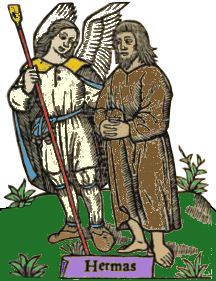
Peasant Hermas and his Angelic Shepherd
Essentially, I appeal to the etymology of “forensic”: something that can be tested, reasoned out, or “heard” in a public forum. But whereas my book foregrounded The Shepherd of Hermas and ultimately came to the subject of canon by means of the vestiges of its reception history into the fourth century, this article instead tried to make a claim about the formation of the NT canon by reflection on the fate of The Shepherd, as I say, if we are willing to let The Shepherd be our guide to the canon.
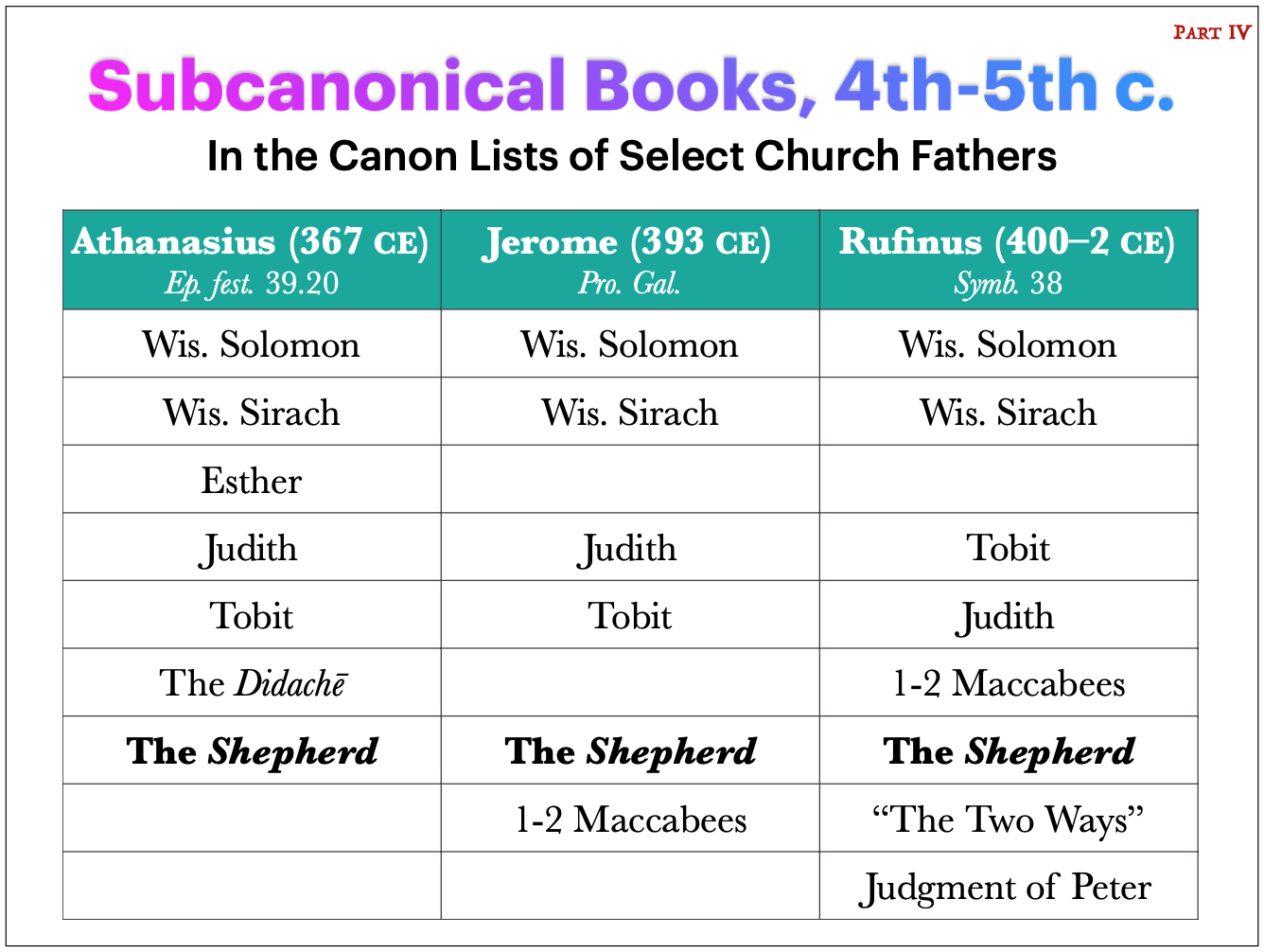
Athanasius, of course, is the key figure in this equation, for not only does his 39th Festal Letter (367 CE) contain the first list of the twenty-seven books that comprise our New Testament, but he also sidelines The Shepherd into a subcanonical category of what for him are catechetical books, able to be read to/by neophyte Christian initiates but not appealed to for the formation (or substantiation) of Christian doctrine. (Some eight or nine years prior to this, he had also declared The Shepherd to be not “of the canon” in his Defense of the Nicene Definition of Christology.) Fortunately, not only does Athanasius’s canon list achieve a sort of translocal usage via the translational work and erudition of Jerome, but so too does his subcanonical list, in a slightly altered fashion that yet reveals its genealogical link to the anti-Arian, pro-Nicene Alexandrian bishop.
Slide from one of my NT canon lectures; see also Table 1 in the article, pg. 47.
Thus, whatever we may make of Eusebius’s pioneering scriptural list in Hist. eccl. 3.25 and other prior indications that Christians were attempting to restrict their authoritative scriptures before Athanasius, their work is, as I describe it, a bit of “noise” that distracts us from the church’s true accession to a canon in the heat of internecine theological battles of the late fourth century. I will leave the rest of the argument to be discovered in my article, and only wish to lament one error of terminology that I failed to catch before publication, on pg. 50: please read “filial” as “fraternal”!
The article’s abstract follows:
Scholarship on the New Testament canon regularly relies on criterial and reception-historical methodologies to antedate the Christian scriptural collection well before its first advocacy as a “rule” of scripture in the 39th Festal Letter of Athanasius of Alexandria (367 CE). Pushing back against these narratives and associated tendencies, this article prefers a functional or forensic approach to the institution of a twenty-seven-book New Testament and highlights evidence demonstrating how the Athanasian episcopal canon was amplified, amended, and accepted in the Christian East and West in the decades following its promulgation. Against suggestions that the canon existed as early as the second century, this handling of data on the New Testament, a scriptural instrument set forth with authoritative and exclusionary intentions, fits the guidelines of creative discourse and historical redescription so as to credit Athanasius, in the fourth century, as the inventor of the canon regnant into the present day. Among other foci, tracing the fortunes of a subcanonical category of books shows the potential for new histories of familiar canonical evidence that may ensue, especially those that plumb the possibility of dissent to the Athanasian scriptural boundaries or augment our awareness of the place and value of such an established standard within institutional, monastic, academic, imperial, and even so-called heretical contexts in and beyond the fourth century.
Robert D. Heaton, “Toward the New Testament Canon as Fourth-Century Invention: The Scriptural List of Athanasius and Its Reverberations,” Religion & Theology 30.1-2 (2023): 30–54. https://doi.org/10.1163/15743012-bja10049.
The Shepherd of Hermas as Scriptura Non Grata: From Popularity in Early Christianity to Exclusion from the New Testament Canon (Lexington Books, 2023)
With my book set to release later this month from Lexington Books, I thought I might write an introductory blog post in a Q&A style for any potential readers who encounter my book title, cover art, this odd text called the Shepherd of Hermas, and find themselves awash with confusion about it. If you are asking yourself asking basic questions like “Who is Hermas?” or “Who is the Shepherd?” and “Why is there a tower on the book cover?”—well, read on! Beyond this, there are no stupid questions about the Shepherd, so ask any that I didn’t anticipate in the comments section below.
And be sure to read to the end for details about a promotional giveaway of my book!
Why did you write this book, and why do I need to know about it?
I first encountered the Shepherd of Hermas early in my doctoral program, when it was discussed frequently by authors like Lee Martin McDonald and Bart Ehrman in the context of books that were canonized as part the New Testament and those that were not. Remarkably, the Shepherd is one of just two New Testament-adjacent books mentioned explicitly by Athanasius of Alexandria (Egypt) in the year 367, when he delivers the first list of the 27-book New Testament that matches ours today, as being unfit for the canon. Other unmentionable books are considered more peripheral to the church’s scriptures and propounded by heretics. Around the same time, however, possibly the world’s first pandect Bible—which we know today as the Codex Sinaiticus—included a copy of the Shepherd within its massive leather covers. Earlier in his career, Athanasius quoted from it approvingly as well, but he seems to have turned on the Shepherd by the late 350s. So, the Shepherd was a book of contested value in early Christianity, especially in Egypt but also seemingly elsewhere, and this only increased the intrigue for me.
When I first read the Shepherd, I was surprised by its style and length. It took me the better part of a weekend to make it through the end of the book, given how thematically odd and repetitive it was. Hermas writes in a first-person style, recounting detailed conversations he has with his revelatory interlocutors, and he frequently revisits old ideas and experiences as they are interpreted afresh for him. This all results in a very simple pedagogical method and suggests that Hermas did not possess the authoritative clout to simply demand obedience or adherence to his preferences from his contemporaries.
Some scholars have been put off by Hermas before; long ago, the translators of the Ante-Nicene Fathers series found its form “distasteful” and its content “repugnan[t].” More recently, others have explicitly endorsed its exclusion from the New Testament. My experience with the Shepherd has been more positive, propelled especially by its possible alternative trajectory within early Christianity. For example, Hermas discusses salvation in far different terms than someone like Paul: he imagines a community striving toward virtues to secure their salvation, rather than the relatively simpler notion of belief or confession (e.g., Rom. 10:9). Hermas also outlines a set of Christian commandments and delivers other metaphors for salvation and relations between diverse members of the church.
David Ferry recently translated the Aeneid for the University of Chicago Press and spoke in his introduction of being “in love with [Virgil’s] voice … telling it how it is with all created beings, the very leaves on the trees, the very rooted plants, the beasts in the fields, the shepherds trying to keep their worlds together,” and so on among the subjects animating his interests. While I might not speak of an affinity with Hermas in precisely the same way—and Hermas has far different concerns than providing Rome a heroic, mythological origin story—I too have identified with the subject of my inquiry, for Hermas attests a certain grounded realism about behavior and ethics not always found among Christian scriptures. He tells it how it is: proper ethics and virtuous habits build the church. For good reason did French scholar Philippe Henne once dub the Shepherd the “manual of Christian life.”
All that said, this book is a revision of my dissertation from 2019, and so it was initially pursued as the capstone of my doctoral studies. Since that time, I have reworked some of the chapters and sections, giving a greater focus to, for example, the anonymous Christians in the third century who took inspiration from the Shepherd. Other parts of the dissertation have been rewritten, reduced, or omitted altogether, hopefully resulting in a more refined argument about the primary subject of my inquiry: the exclusion of the Shepherd from the New Testament in the fourth century and beyond.
Who is Hermas?
Peasant Hermas and his Angelic Shepherd from a Medieval Woodcutting, colorized by me!
Hermas is just… some guy. Apparently, he was no one special and his identity was not remembered far beyond his lifetime. Internal data from the Shepherd convey the following: his name is Greek and he identifies himself as a threptos, which means that he was probably a foundling slave, serving at one time in an elite Roman household or business before earning his manumission. We possibly know the name of his mistress/one-time owner, Rhoda (Rose), but this could also be a literary fiction or an element added to the text later to heighten the inappropriateness of Hermas’s eroticism. Hermas seemingly associated within the ranks of freedpersons, had mixed success at business and some failed commercial ventures, possibly in the agricultural sphere, and was married with children. He does not seem to have personally known any of Jesus’s apostles, whom he looks back upon from a certain remove. He lacked institutional authority in the Roman church and was probably seen by his contemporaries as a prophet, a role that, per a book like the Didache, was not uncommon to churches of the late first and early second century.
Data external to the Shepherd remembered Hermas in different ways depending on the degree to which the source valued the text. For Origen, who cites the Shepherd some 15 times in his extant writings, Hermas is none other than the person greeted by Paul (Rom. 16:14) in the lengthy salutations in the last chapter of his letter to the Romans. While not impossible, this is extremely unlikely, and relates more to Origen’s scrupulous efforts to identify significant figures in the scriptures (note how he does something similar with Clement in Phil. 4:3). Even on the very small likelihood that the Hermas greeted by Paul is the Hermas who authored the Shepherd, this would still be a person basically unknown to Paul, who never reaches Rome on his own volition. Hermas does seemingly acknowledge a Christian leader of the Roman church named Clement, and this accords well with the later tradition, independent of Hermas, that Clement was a Roman bishop in the late first century.
Alternatively, a source of highly debatable value thrusts Hermas much further back into the middle of the second century. The Muratorian Fragment, so-called because it was discovered by an Italian librarian in the 18th century, claims that Hermas was the (biological?) brother of a different bishop of the Roman church named Pius, and that the Shepherd was written during Pius’s time in office. This would place the Shepherd’s composition not around the end of the first or beginning of the second century, as seems natural from the book itself, but instead roughly 50 years later. (For the author of this fragmentary scriptural catalogue, the Shepherd’s late composition weighs heavily in his restriction of its use for the church.) Scholars are increasingly deeming this information about the Shepherd difficult to accept, but it still holds some sway in the secondary literature today, despite viable arguments placing the Muratorian Fragment itself in the third, fourth, or even fifth century—at a time far removed from the probability that it contains reliable information about Hermas’s identity or the composition of the Shepherd.
In the end, although the conclusion would seem the most unsatisfying one available to us, we are probably correct to regard Hermas as an unknown, unremembered figure (if not an intentionally forgotten nuisance to self-fashioned institutional authorities) of the early Roman church.
What/who is the Shepherd?
Principally, the Shepherd is a character in the Shepherd who appears to Hermas and reveals things to him. Today we might say that the Shepherd was a voice in Hermas’s head, or the externalization of Hermas’s own ideas onto another character. But Hermas almost certainly imagined his Shepherd as an embodied apparition, given that he describes his clothing and appearance and depicts him as walking, moving about, and delivering dialogue as a typical book character would.
The Shepherd appears to Hermas at a curious point some 25 chapters into the book (as we have subdivided it today). Hermas has already received four official visions by this point, mediated by various heavenly or angelic characters, the most prominent of whom is Lady Ecclesia—the Church herself! When the Shepherd arrives on the scene, Hermas identifies him as the “one to whom I was entrusted” and also calls him the “angel of repentance,” hence the image above where “Peasant Hermas” is attended by his “Angelic Shepherd.”
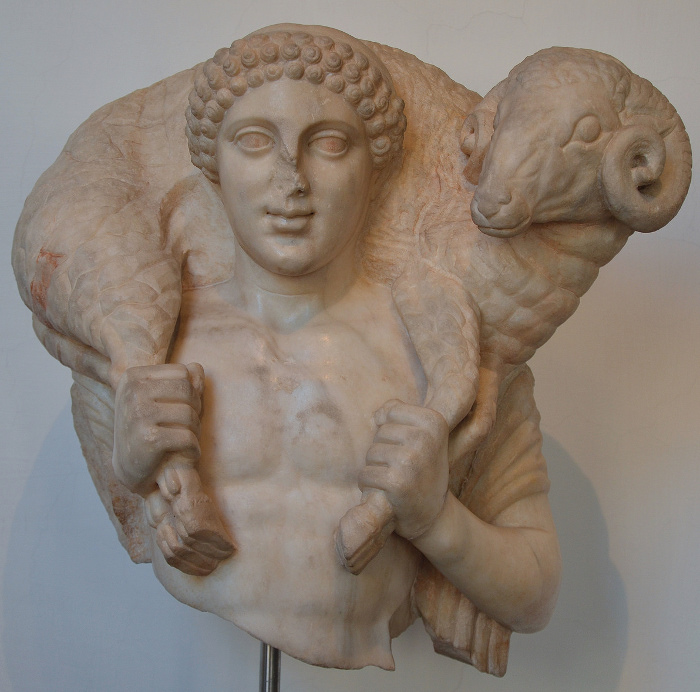
While modern readers might have certain expectations of Jesus showing up as the Shepherd, the Shepherd is certainly not Jesus. Not only did no ancient authority equate the Shepherd with Jesus, but Clement of Alexandria found ways to pair quotations from the Shepherd with quotations from the gospels, indicating that he believed these two characters, though distinct, yet spoke in the same voice. The Shepherd seems instead to be constructed from a Greco-Roman tradition of herdsman imagery, where mythological deities like Hermes were often depicted as shepherds, guiding individuals through life’s troubles or souls to the underworld/afterlife. In this light, our author Hermas probably reflects a syncretic period of early Christian history when not all new adherents to Messianic Judaism in Rome were required or expected to fully divest themselves of their prior religious heritage.
Perhaps confusingly, the book written by Hermas was simply known as “The Shepherd” or “Book of the Shepherd” in antiquity, but has been dubbed “The Shepherd of Hermas” by scholars for the last few centuries to differentiate it from other, more popular adaptations of herdsman imagery, such as the depiction of Jesus as the Good Shepherd. You will frequently observe the convention of italicizing “Shepherd” when scholars refer to the book written by Hermas, the Shepherd, while leaving “Shepherd” unitalicized when referring to the character in the book who reveals knowledge and interpretations to Hermas.
Why are you calling the Shepherd of Hermas “Scriptura Non Grata”?
The Shepherd has always been a difficult book for Christians and scholars alike to categorize. Only rarely was it ever condemned outright as heretical or apocryphal, even by association, and this condemnation in the sixth century (see the Decretum Gelasianum, section five) seems perfunctory and far removed from its actual use. Athanasius came to think of the Shepherd as useful only for the initial instruction of neophytes, but his judgment seems intentionally constructed to wrest it away from other Christians who simply counted it among the scriptures of the church. Thus, I wanted to come up with some way of depicting the Shepherd’s scriptural-yet-contested value within the early centuries of Christianity, particularly for ecclesiastical authorities who wished to invent a closed corpus of the Holy Scriptures, and a phrase came to me while I was dissertating. Just as persona non grata means “unwelcome person,” a slight tweak of that phrase, already well known enough to English-speaking audiences, could quickly convey a status of “unwelcome scripture” to some particularly powerful and influential individuals in the early church.
Thus was scriptura non grata birthed, and I have pressed it into service for the title of my book and the argument therein. As far as I know, this is a neologism/new phrase coined by me. Paul McCartney was apparently similarly hesitant when he dreamed up the music to “Yesterday,” though, and I say this without intending to compare myself positively to the famous Beatle. However, if I have taken the designation from anyone before me, it was entirely unintentional and I don’t know where I would’ve encountered it.
So, why was the Shepherd not included in the New Testament?
You’ll have to read the book for my full argument, but given the Shepherd’s demonstrable popularity in early Christianity, this unanswered question has proven worthy of a study of this length. Scholars frequently observe that our manuscript recoveries of the Shepherd from the early centuries, though often very fragmentary, far outstrip the minor letters of the New Testament and are more closely aligned with the manuscript hauls of gospels like Matthew and John. We also know from significant church fathers like Jerome and Eusebius that the Shepherd was read aloud in church services in the fourth century, and other patristic sources refer to it as “scripture” using what are seemingly technical terms for authoritative writings. In such a situation, it becomes imperative to understand why a book that achieved such celebration in early Christianity was not canonized as part of the church’s New Testament.
Scholars have offered a variety of rationales for the Shepherd’s exclusion before. For some, it was always and only a “catechetical” text, meaning that it served the function of a textbook or confirmation manual for early Christians and any higher value ascribed to the Shepherd by believers was aberrant. A related argument to this is that there always existed a third category of scriptures: (1) canonical/scriptural, (2) noncanonical/apocryphal, and (3) valuable/useful—but not canonical. I find both of these depictions lacking, slightly tautological, and overly determined by the same fourth-century authorities whose scriptural categorizations and discussions played a role in forging the canon. Another scholar has claimed that the Shepherd was too long to be included in the New Testament—apparently no one notified the community underlying Codex Sinaiticus! Finally, a number of scholars describe the canon as crafted by a set of criteria (apostolic authorship, orthodoxy, widespread use, etc.), but they have a difficult time explaining where the Shepherd ran afoul of the putative criteria for inclusion of texts.
Alternatively, I have suggested that the criteria be abandoned as unfit for purpose, and new lines of inquiry be furrowed to account both for the continuous celebration and treasuring of some texts from the first or second century onward and the much later official exclusion of books like the Shepherd, the Didache, and others. I focus especially on what I describe as the “ecclesiastical-political” dimension of the canon, and the breadcrumbs of an episcopal “gentlemen’s handshake” on the limits of the New Testament as forged by Athanasius and other powerful figures indebted to his canonical designs. This is almost certainly just one part of the puzzle of canon, and important work continues to be pursued tracing, for example, the impact of scribal habits and scriptural mini-collections, disagreements between institutional Christians and independent, “academic” or monastic Christians about scriptures of value, Christian piety as it was “lived” or experienced by more everyday believers in contrast to the lettered elites, and more.
Understanding how we got our Christian Bible is of the utmost importance to scholars, students, and churchgoers alike, and I think that readers at these different levels can all find material that speaks to them in my book. I challenge some unwarranted assumptions along the way and provide new material to ruminate over. One popular way of thinking about canon, for example, is that it was set as soon as the final books were either written or deemed worthy for inclusion—whether that be some of the Catholic Epistles, Hebrews, Revelation, some other book, or some combination of all these. But this misses that an important corollary to the inclusion of books is the exclusivist nature of the canon: other Christian scriptures, of which there were dozens and dozens more outside the New Testament, were left out, and these official determinations to exclude came hundreds of years after Jesus’s life and often in heresiological discourses—boundary-setting efforts by elite Christian bishops over doctrinal matters that no longer actively animate the church. I have written a book about the most demonstrably popular and, perhaps, one of the most neglected of all such excluded books, and I think it’s worth considering for what an un(der)told early Christian trajectory might reveal about the complex beginnings of the world’s most populous religion, as well as the shrouded inner politicking that privileged specific forms of Christ-devotion over others.
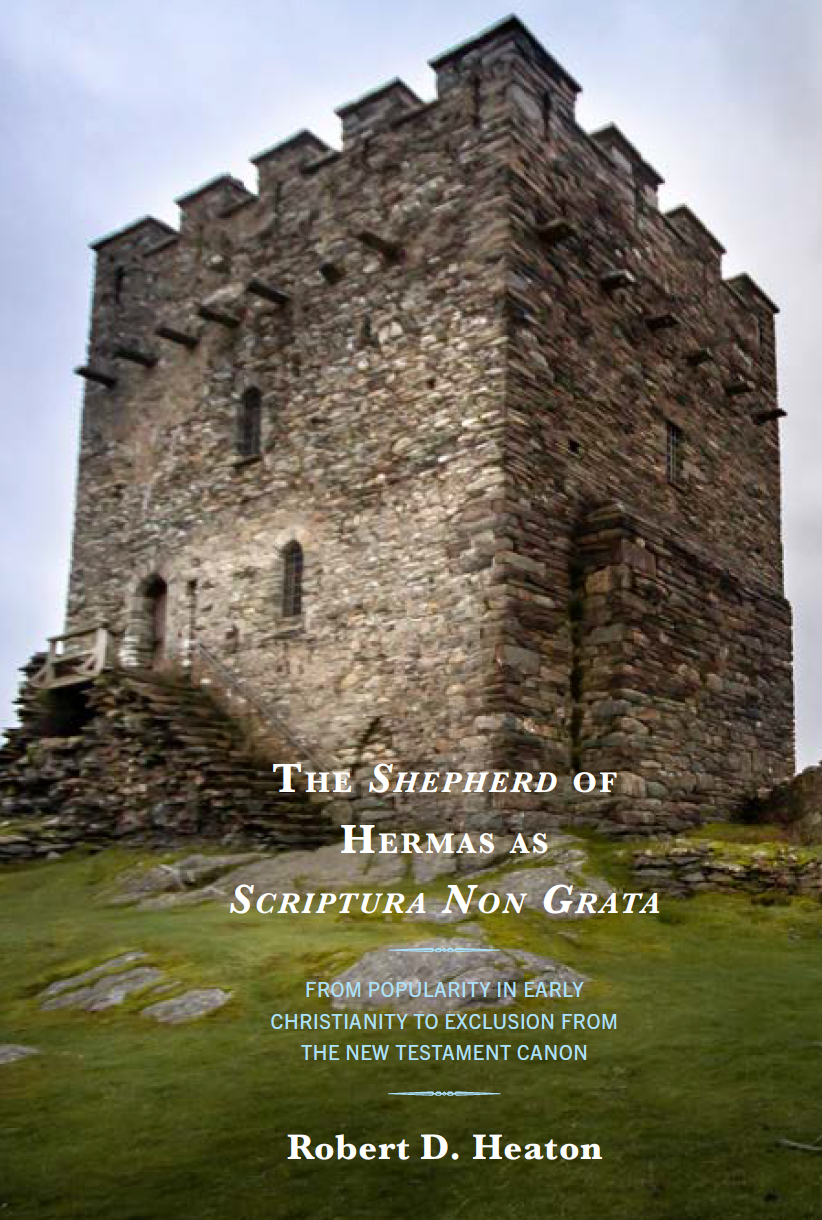
Why is that medieval tower on the cover?
Scholars who write about the Shepherd have a difficult time with cover art. Some opt for generic shepherd imagery from the catacombs or elsewhere, which is an acceptable candidate among the lack of great options given that centuries of Christian history preserved virtually no iconography for Hermas himself. The woodcutting above, from a Latin illustration of angelophanies, that I colorized haphazardly is the first visual depiction I have ever seen of Hermas, and I didn’t find it until after my dissertation was complete!
Church-Tower Fresco Inspired by the Shepherd of Hermas, Room A1 of the Upper Vestibule of the San Gennaro Catacombs, Naples, Italy (3rd c.) Source:Google Arts & Culture via Catacombe di Napoli
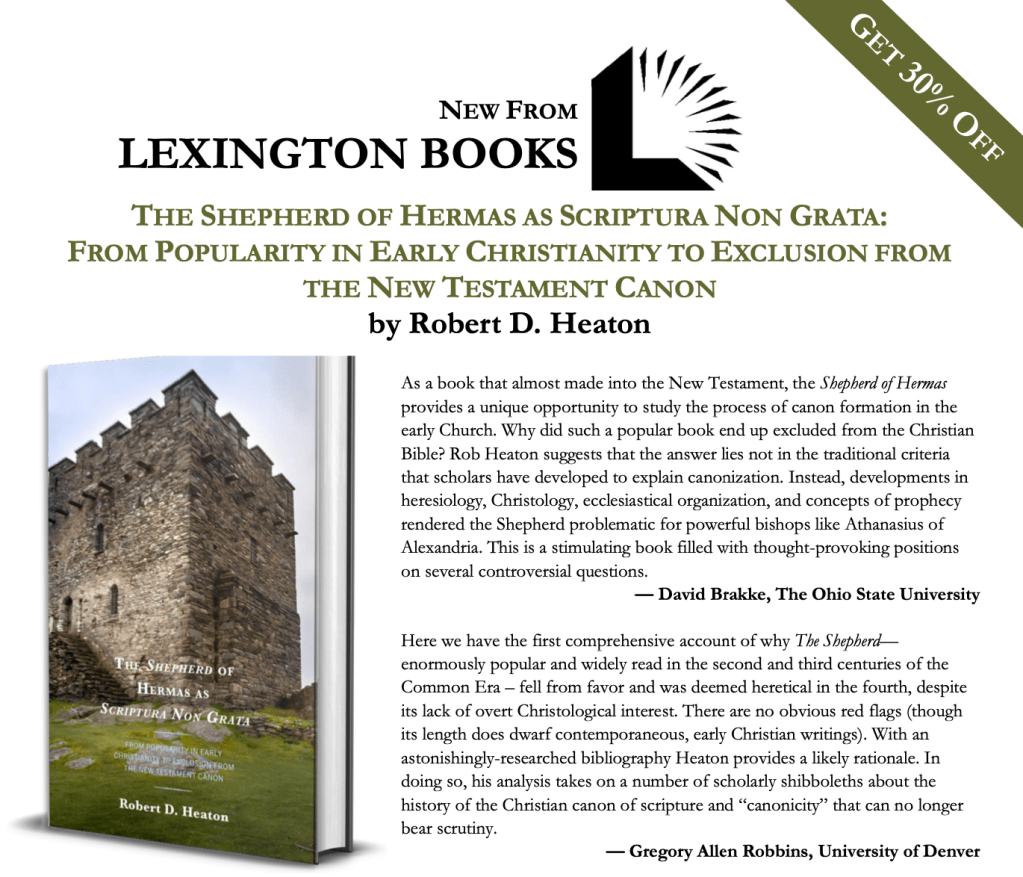
I decided to take a different route altogether for my book cover. A major metaphor in the Shepherd is that of a tower built before Hermas’s very eyes (sometimes called the “Celestial Tower,” but which I refer to as the “Church-Tower”), which is delivered as a symbol or portrait of salvation. Via both of his revelatory apparitions, the Lady Church and the Shepherd, Hermas learns that the tower—itself representative of the Church—is constructed of petrified believers who realize both an eternal remembrance and the safety of salvation by dint of their inclusion in its structure, which is achieved postmortem if one cultivates the virtues of Trust/Belief, Patience, Sincerity, Knowledge, Love, and so on during their mortal life. This metaphor was significant enough to a group of early Christians in Naples, possibly from the early third century, who had it painted on the vault ceiling of their communal burial room in the Catacombs of San Gennaro.
Although I discuss this important artifact in the book as an authentic example of the Shepherd’s positive reception in early Christianity, I thankfully found a rights-free image of a tower that could stand in and symbolize the great Church-Tower of Hermas’s imagination. Being a metaphorical thinker himself, hopefully Hermas would appreciate this adaptation or evolution of his soteriological imagery that struck a chord with at least some early Christians.
In case you are interested: the tower on the cover is from the remains of Dolwyddelan Castle, Snowdonia National Park, Wales (active 13th century). It has nothing to do with the Shepherd of Hermas… until now!
Have we always known about or had the text of the Shepherd of Hermas?
This is a complex question, but it might boil down to whether or not the Shepherd is a “rediscovered” text like the Didache (known by name from patristic references but only found in 1873) or many excavated in the finds of Nag Hammadi (unearthed in 1945). Unlike these texts, the Shepherd has been continuously known to the church, or segments thereof—with one major and one minor caveat.
The major caveat is as follows: we still do not possess the entire text of the Shepherd in Greek, its original language. Thanks primarily to two manuscripts that found homes in monasteries of Egypt (St. Catharine’s, Mt. Sinai, hence the name “Codex Sinaiticus”) and Greece (St. Gregory’s, Mt. Athos, hence “Codex Athous Gregoriou” 96), we do have about 94% of the Greek text today. But Codices Sinaiticus and Athous were only “discovered” by Western Christians and scholars in the great manuscript hunts of the 19th century, so the Shepherd was known for most of its life to the church at-large in two separate Latin translations, which were mainly the preserve of ecclesiastical elites who possessed the leisure time to dabble into such curiosities (this constitutes the minor caveat). Other than Latin, the Shepherd only exists in complete form in Ge’ez, an ancient Ethiopic dialect.
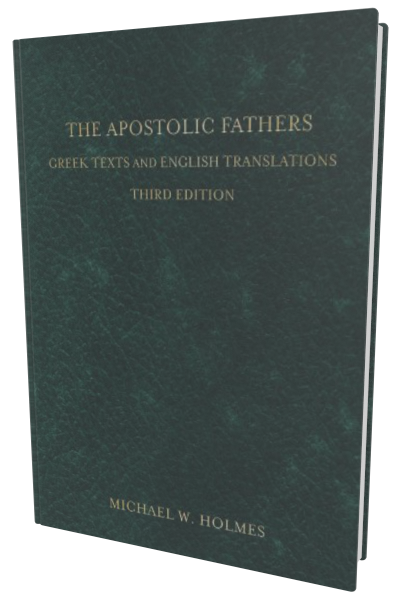
The Apostolic Fathers: A Subcanonical Corpus of 1st- and 2nd-Century Texts where you will find the Shepherd of Hermas today.
Since the late 17th century, the Shepherd of Hermas has regularly (but not always) been included in the subcanonical scholarly corpus of texts known as the “Apostolic Fathers.” This collection was initially published as the “Holy Fathers who Flourished in Apostolic Times” before being shortened to its present conventional name. You can find good recent translations of the Shepherd in editions of the Apostolic Fathers from Michael W. Holmes and Bart Ehrman, or an older and less reliable translation from the Ante-Nicene Fathers series can be accessed for free online.
In short, while segments of the church have always known about the Shepherd, and while it has been a restricted text for many centuries, it has never been more available to people interested to “discover” it for themselves than it is today. Thankfully, this also coincides with a welcome academic renaissance into various aspects of Hermas’s work, not just by myself but also from othernew and upcomingscholars. This collective attention affirms that the Shepherd of Hermas tells an important story about Christian beginnings and constitutes a major missing link about the church’s diverse piety that, thankfully, fourth- and fifth-century bishops were unsuccessful at extinguishing completely from historical memory.
The Holy Monastery of Saint Gregory, Mount Athos, Greece, where a 15th-century manuscript containing much of the Shepherd of Hermas in Greek was discovered in the 19th century. Source:Wikimedia Commons (CC BY-SA 3.0)
What else do I need to know?
Not much at the moment, but there’s plenty more to discover! If you’ve made it to the end of this post, you now probably know more about the Shepherd of Hermas than 99% of the population, so perhaps you are ready to read the Shepherd for yourself… followed by my book! Please check it out via Lexington Books, my publisher, and you can use the code LXFANDF30 at checkout for 30% off the print book or ebook if you’d like. (The initial hardcover price, while high, is typical of new scholarly monographs and aimed particularly at academic libraries and scholars in the field. If you are connected to a university library, please recommend the book to your acquisitions staff!)

 Robert D. Heaton, Ph.D.