Blog

D.S. Warner and the Dilemma of Sectarian Soil

My class for Church of God History frequently requires assignments similar to those you may have seen me post for Old Testament class. While I will not be posting every one of these assignments, I will select those that I regard as interesting, worthwhile or enjoyable for posting on the blog. In particular, the prompt for this assignment included an evaluation of D.S. Warner‘s claim, as made in 1878, that the holiness doctrine could not prosper on sectarian soil. Read on and learn!

——————————————————————-

Rather famously, Daniel S. Warner wrote in a March 1878 diary entry essentially that holiness was not possible in a denominationally rich environment. But as our duty is to understand history in its proper context, it is foolish to simply repeat this groundbreaking thought without applying the historical perspective. After being strongly influenced by his second wife, Sarah, and her father, Warner came to appreciate entire sanctification as the second work of grace to the extent that he sought the experience himself, ultimately declaring in July 1877 that the process had been completed.[1] Naturally, Warner then began to teach entire sanctification and the doctrine of holiness to his audiences, much to the chagrin of boards of elders. While initially Warner was only reprimanded for his tendencies, he eventually overstepped boundaries by bringing in holiness “bands” and had his license to preach revoked on January 30, 1878. As Warner later would recall, the day after being excused from preaching was one of divine revelation. He wrote,

“On the 31st of last January the Lord showed me that holiness could never prosper on sectarian soil encumbered by human creeds and party names, and gave me a new commission to join holiness and all truth together and build up the apostolic church of the living God. Praise his name! I will obey him.”[2]

D.S. Warner
D.S. Warner

In examining the declarative statement comprising first half of this quote, we realize that two main issues are brought to the forefront. It becomes possible, then, to evaluate the issues on the basis of their inherent limitations and strengths. First, Warner’s devotion to the advancement of holiness is observed. Though he has only grasped or accepted the doctrine for a short period of time, holiness and sanctification are of the utmost concern to him, which is further supported by the way in which he jeopardized his previous position as preacher. Second, it is hard to avoid Warner’s opposition to sectarianism. Throughout the decade of the 1870s, numerous quotes suggest that he was fed up with denominational thinking, which is crystallized in an April 1876 diary entry saying, “O Sectarianism! thou abomination of the earth, thou bane of the cause of God, when will thy corrupt and wicked walls fall to earth and cease to curse men to hell?”[3]

Consideration of these aforementioned two issues and their limitations must address the timeline of Warner’s thought development and the proximity of the ultimate revelation in regard to his dismissal from preaching. In doing so, it is unavoidable that Warner realized the “abomination” of denominational chest-thumping much earlier than he latched onto holiness doctrine. Therefore, was Warner’s January 31, 1878-dated claim a true revelation from the Lord, as he professed, or simply the adaptation of long-held feelings on sectarianism to a newly revealed problem, that is, the revocation of his license to preach freely? Furthermore, it needs to be admitted that bitterness may have played a role in making the claim; as he wrote on January 31, his dismissal was a “dreadful calamity and intolerable to bear.”[4] Another significant limitation of Warner’s claim is evident through the application of the measuring stick of history. As it stands today, the modern Christian climate remains heavily denominationally divided. So as a capital-c Church, are we not holy?

Approaching Warner’s claim critically tends to disregard or dismiss it, when historically the revelation, whether from the Lord or crafted out of Warner’s perception of the situation, undoubtedly served grander purposes. To be sure, the claim had (and still has) its strengths. It enabled Warner to forge relationships with some denominations and organizations—including Mennonites and Holiness groups—while at the same time arguing for the abolishment of thinking along sectarian lines. As an example, Warner’s desire to remain true to the January 1878 revelation eventually resulted in a Gospel Trumpet declaration that “now we wish to announce to all that we wish to co-operate with all Christians, as such, in saving souls—but forever withdraw from the organisms that uphold and endorse sects and denominations in the body of Christ.”[5] This June 1881 proclamation was a watershed moment for the early Church of God movement, and it would not have been possible if Warner and others did not actively seek to fulfill the January 1878 revelation, which served to project the movement’s grand vision. Even today, when paraphrased, we might say that, “We cannot be the church that God intended when we elect to segregate ourselves ideologically and prioritize our differences among the most important foci of our ministry.” In that sense, Warner revealed (or had revealed to him) a timeless truth.

Ultimately, the historical interpretation of Warner’s January 1878 revelation lies in its ability to produce positive effects for the Church. In that light, Warner’s mission was a revolutionary success. This doesn’t rubber stamp his tactics or excuse his overly dismissive, damnation-centered attitude toward honest followers of Christ who happened to claim denominational faiths. However, we have to conclude that God used the faulty comprehension of his fallible followers to address the burgeoning problems of each period of history and produce ultimate good for his Church body.


[1] John W. V. Smith and Merle D. Strege, The Quest for Holiness & Unity, 2nd ed. (Anderson, IN: Warner Press, 2009), 46.

[2] Ibid., 47.

[3] Ibid., 45.

[4] Ibid., 47.

[5] Ibid., 51.

Israel? And A Quick Update…

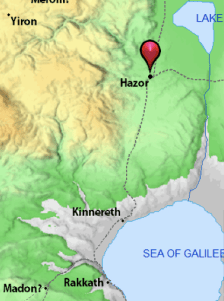
    Hazor lies north of Chinnereth and the Sea of Galilee in Israel, as shown in this map from bibleatlas.org.As you may or may not know, I am extremely hopeful that I will be able to travel to Israel for an archaeological dig this summer at the northern Galilean site of Tel Hazor (simply meaning “Mound” or “Hill” of Hazor). At various points in the seventh and eighth centuries B.C.E. and further back in antiquity, Hazor was occupied by Canaanite and Israelite populations, and the archaeological program I’ve found would explore these time periods. If you’d like to learn more about the history of Tel Hazor, check out the Hazor Excavations Project hosted by the Hebrew University of Jerusalem.

Anyhow, I’m highly excited even to have the opportunity to consider traveling to the Holy Land, let alone being there for 4-6 weeks to study and explore. I should know within the next week whether or not my proposal for this upcoming summer will be funded. Won’t you pray that I may be allowed to participate in this experience, should it be in the will of God? Thank you so much 🙂

With that duly introduced, I think a quick update is probably in order as well, seeing as it’s been almost two months since I last did so. My wife and I are all moved in to our new apartment in Anderson, and it goes without saying that we love it. I am not kidding when I say that we tripled in space, going from around 430 sq. feet to nearly 1300 sq. feet. Sometimes we don’t know what to do with all of the space!

The only downside that I’ve found this semester is that getting into a groove has been difficult. When I knew I had a 45-minute commute to and from campus, that made my time all the more valuable; I knew that I had to use what little I had wisely. I’m not saying I’ve been slacking this semester… just the opposite, actually. I feel like I’ve worked my tail off even though I remain behind. A good part of this may be due to the MLK holiday and our numerous snow days in recent weeks – there has yet to be a normal week this semester, so to speak. I am confident it will all come together when I gain an appreciation of the normalcy of the semester!

As for my classes, two are continuations from courses last semester. The second semester of Greek has proved somewhat harder, as we’ve been introduced to participles, which are nasty beasts in their own right. The second semester of Old Testament History and Literature is shifting the focus to the prophets and wisdom literature, which has so far been enjoyable. Reflections I’ve done on Jonah and Joel, as well as some other selected classwork, will hopefully be soon posted to the blog!

My other two classes are not taken in a traditional classroom. I am taking Church of God history as an online class because the in-class section has a time conflict with my OT2 course. While I thought this course would be dry and boring, it’s been worthwhile to understand the history of the movement with which I now identify closely. Furthermore, I am taking an independent study entitled “Christians and Old Testament Theology,” which has proven enlightening in the regard of relating to the beliefs and understanding of Yahweh espoused by people of Old Testament times. In some cases I believe we read too much into the text, i.e. by trying to reconcile the Scriptures in the light of Jesus. Sometimes we can go too far by stretching the text beyond what would have been understood by the writers and original hearers of these treasured books. But, I digress.

Thank you for reading and for being hopeful along with my regarding Tel Hazor in Israel! Until next time…

What About Mark? John?

What about Bob?As Christians, we generally ignore these two gospels around Christmas time unless they are otherwise advantageous to us. Mark serves us… well, by having served Matthew and Luke enough to finagle Mary and Joseph to Bethlehem. (The birth story wouldn’t have been quite the same if Mary texted her midwife and gave birth to Jesus in the spare room of her Nazarene home, right?) While we can always count on John for a spoonful of divinity-speak, Mark and John certainly don’t say anything about the supposed Bethlehemic birth of Jesus, which is what we tend to be celebrating.

Or are we? Is there anything about our Christmas celebration that would indicate we’re celebrating something more than Winter Solstice (or Festivus)? We like to think so, but we’re easily susceptible to the trap of materialism (believe it or not) and traditionalism.

Something I look forward to around Christmas and Easter is the broadcast of religious-themed programming on TV stations like the History Channel and National Geographic purporting to explore the history behind our traditions and the historicity of the holidays in general. I was reminded last night about the pagan roots of our celebrations, from the “Christmas” tree to the candles to other nonsense that has nothing to do with the birth and life of Jesus.

But these hour-long features are a topic unto themselves. Since we have no footage from many thousands of years ago, actors and actresses are hired to reinforce the stereotypes that scholarly types eventually come on screen to refute. And anytime some sort of Hebrew or Greek translation error comes into play, it is drawn out and treated like a major revelation. Six to eight minutes of solid information is stretched out into 47 minutes, and after you solicit advertising, you’ve got yourself an unnecessary hour-long block. But that’s not all! Some sort of ambiguous ending is always thrown in, so you are left with no clue why you just spent an hour of your time learning nothing in particular.

But back to those not-so-Christmasey gospels. For all of the affinity that pastors have with John (hard to ignore those way and truth and life Ἐγώ εἰμι statements), it just throws a wrench into the Bethlehemic birth story. Jesus wasn’t just God’s divine son, but he even preexisted with God before coming to Earth! While the common “good” Christian thing to do is meld these accounts into an über-Gospel, it’s important we recognize that John’s community put their gospel into writing not to augment the Synoptics, but to supplant them.

For Mark, it was enough that Jesus was and Jesus did. But predictably enough, the communities that heard his gospel started asking questions, and started thinking of him in terms of the history of Israel. Was Jesus the one who was to come? Was he “Emmanuel,” God with us? Certainly a man so knowledgeable and gracious had an eventful birth.

I’m not going to pretend like I have all of the historical answers, but we can’t deny that those people who Jesus interacted with on a daily basis didn’t ask and didn’t care where he came from, how he was born, etc. The disciples didn’t whisper to each other about it in their spare time, and they didn’t entertain such gossip about him from outsiders (biblically speaking). Either they all knew and accepted his upbringing (which would have made it into Mark) or they didn’t care. I subscribe to the latter interpretation.

Which would mean that the message of Jesus is in his message, not in his person. Not in his birth.

Which would mean that we’re wasting a lot of time worrying about the acceptance of our nativity scenes.

Which would mean that on his “birthday” (I say that very loosely), shouldn’t we be stressing his message – his vision of the Kingdom – rather than fables that were crafted after his death?

Merry Christmas, and may we come to understand what that really means.

One Semester Down!

Well, I made it.

Academically, this surely will not have been the hardest semester of my postgraduate experience, but it will probably come to be the hardest one logistically.


A squirrel hanging from a birdhouse has nothing to do with this blog entry, but it was one of the first photos that came up on a Google Image Search for “whew.”


The actual truth of the matter is that my semester ended eight days ago. But for the last week or so, we’ve been frantically packing our apartment so we can move to campus just after Christmas. I feel fortunate enough to blog about it all now that I’m with family to celebrate Christmas or Winter Solstice or whatever it is that we celebrate this time of year (more on that tomorrow).

But starting next semester, I won’t have to wake up so early for my early classes! I’ll still wake up early, and hopefully go through the gym routine before classes begin, but I’m most excited about not having to waste time (and gas) on the drive to and fro. That will free up time to do coursework at a more reasonable hour, cook dinner more often, sleep longer, devote some time to a community ministry and hopefully have a free weekend every now and then for some recreation. Like all of that will ever happen like I imagine.

To recap from the year that was, all of my classes ended excellently… a 4.0 semester! I certainly didn’t expect that, but I’ll take it and try to repeat it again in the spring. Two of my classes – Greek and Old Testament – essentially continue in the semester to come, and to that I will add the history of the Church of God movement (I’ll call it CHOG History) and “Christians and Old Testament Theology,” which has interested me throughout the past semester of Old Testament class. It will be exciting to interact with the beliefs of the Israelite fathers and prophets and understand how Christians can more faithfully apply that to a well-rounded base of faith.

Other than the big post-Christmas move, I have two major personal goals during the break. Those are…

  1. Read for fun! I have been reading Jesus the Riddler by Tom Thatcher for the greater part of the semester, and am almost finished with it. It has been a great read, even if my wife has ridiculed me for enjoying such “boring” books. The good news is that I’ve also checked out Thatcher’s other book, Why John WROTE a Gospel. I have another about the history of Messianic expectations, but I probably will not get to that until next semester.
  2. Apply for funding to go to Israel this coming summer. Through a fellowship, Anderson University funds a student to travel to Israel for an archaeological dig each summer, and I want to get that either this summer or next… but preferably this summer. I have picked out an interesting dig site (Tel Hazor) and need to fulfill the application requirements, including an essay, before January 15.

And besides those things, it would be nice to add some new and fresh content to the blog for the new year. I’m sure I’ll hammer out a blog post or two once I’m settled in Anderson!

Take 3 Minutes to Help My Wife’s 1st Graders!

If you could give $5 of Bill Gates’ money (via Bing) to my wife’s first graders in just 3 minutes, wouldn’t you do it?

Well, you can! It is somewhat of a process, so follow closely!

Via DonorsChoose.org, my wife has set up a project she would like funded for her first grade classroom called “Ready, Set, Centers!” You can read more about it via that link. In the spirit of the holidays, Bing is giving money to projects that you can choose when you pledge to make Bing your homepage! (I don’t think you really have to follow through with it, but I digress…) So follow these steps!

  1. Go to Bing.com/Gives and click on the orange button that says “Start Here.”
  2. Under the “Bing Gives $1” option, click the orange button to proceed. This will take you to a new page which gives you the option to give even more if you make Bing your homepage. Click on that orange button and a form will pop up in your browser.
  3. Under the “I Choose. Bing Gives $5” option, enter your e-mail address twice and agree to the terms and conditions, then press the orange button that says “Make Bing my home page.”
  4. Wait a minute or so and check your e-mail… Bing will have sent you a message with a coupon code that you can redeem on DonorsChoose.
  5. Go to my wife’s page on DonorsChoose.org for “Ready, Set, Centers!
  6. In the box under “Give any amount,” type in a “5” for $5.00 (or any other amount you choose!) and click the green “>” button to proceed.
  7. On the page that will appear, click the green “Check out” button.
  8. This is where you enter the $5 coupon code that Bing sent you in your e-mail inbox. Once you enter the code and press the blue “Redeem code” button, the credit card prompt will disappear (if you only typed in $5 to give). Enter your name and e-mail address and press the green “Place my donation!” button, and you’re almost done!
  9. A new page will appear and you can type in a message that will appear on Lauren’s DonorsChoose page. If you’d like, you can anonymize yourself by clicking the “A donor” radio button!
  10. Submit that form and you are finished! Another page wanting your real cash money will pop up, but you can simply skip that without entering any information.

My wife wants to say THANK YOU VERY MUCH to anyone and everyone who helps out. Up to 40 people can do so! Her little first grade rascals will be that much better prepared because of your efforts!